
Cost Overrun in Construction Projects — Causes, Impact, and Prevention
Cost overrun is one of the biggest challenges in construction and real estate projects. This article explains the major reasons behind budget overruns, including inadequate planning, design changes, inefficient structural planning, material management issues, execution delays, and lack of cost monitoring. Learn how early planning, value engineering, and effective cost control strategies can help developers reduce risks, improve profitability, and ensure smoother project execution.
5/20/20263 min read
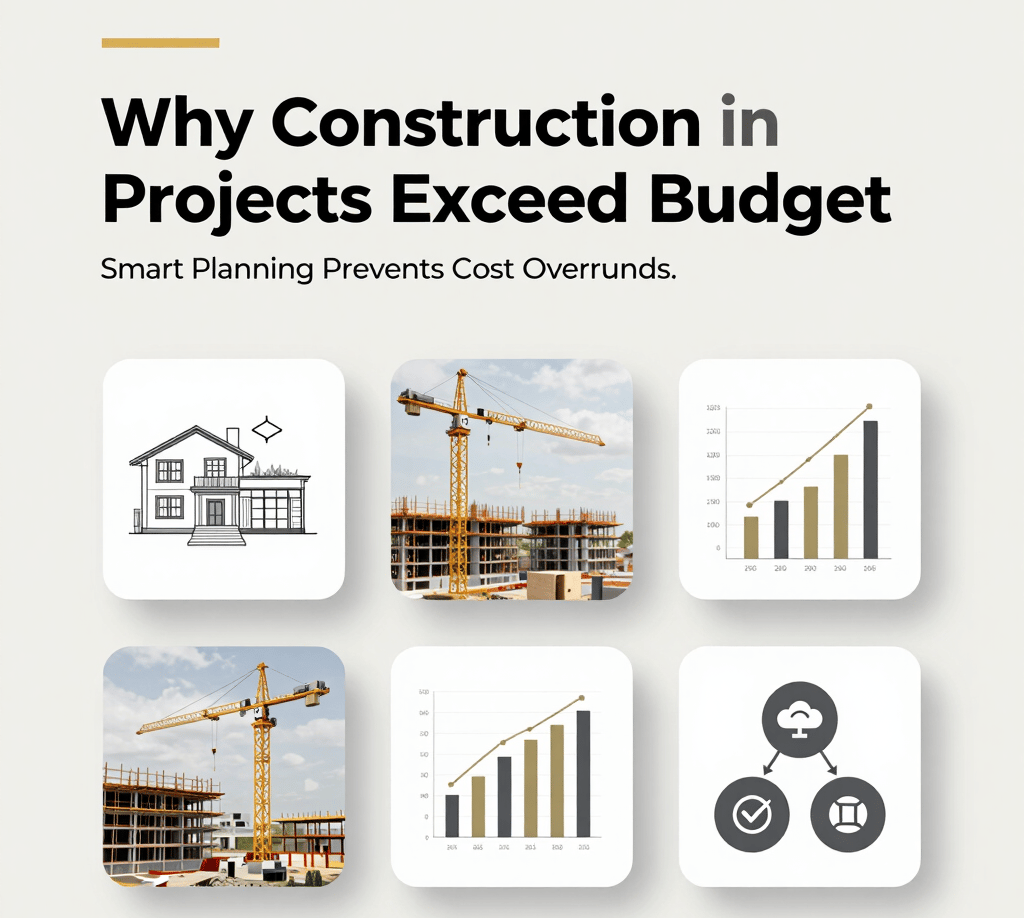
Cost overrun is one of the most critical challenges in construction and real estate development. It occurs when the actual project cost exceeds the originally estimated or approved budget. In today’s competitive construction industry, cost overruns not only reduce profitability but also affect project timelines, cash flow, financing, and overall project viability. For developers and project stakeholders, controlling project cost has become as important as timely project completion.
Construction projects involve multiple variables such as design, materials, labour, equipment, approvals, and execution strategies. Any inefficiency in planning or coordination can lead to significant financial impact. While market fluctuations and inflation may contribute to rising costs, the primary reasons for cost overruns are usually linked to inadequate planning, design changes, inefficient execution, and lack of cost monitoring.
One of the biggest reasons for cost overrun is insufficient planning during the design stage. When project scope, layouts, specifications, and construction methodologies are not finalized properly before execution, changes become inevitable during construction. These changes lead to rework, material wastage, labour inefficiency, and project delays, ultimately increasing the overall cost. Proper planning during the initial stages helps identify potential risks and ensures smoother execution.
Another major contributor to cost overruns is inaccurate cost estimation. Many projects begin with approximate budgets rather than detailed cost planning. Without comprehensive quantity analysis and rate assessment, several project components are underestimated. Costs related to structure, MEP services, finishes, infrastructure, and contingencies often increase as the project progresses. Detailed budgeting and cost planning help developers maintain better financial control throughout the project lifecycle.
Frequent design changes during execution are also a significant cause of cost overrun. Modifications in architectural layouts, structural systems, materials, or specifications disrupt construction activities and increase labour and material costs. In addition to direct expenses, such changes also affect project timelines and increase overhead costs. Finalizing design decisions before execution is essential to minimize these disruptions.
Structural grid planning and design efficiency also have a direct impact on project cost. Irregular grids, excessive cantilevers, complex layouts, and non-standardized designs require additional reinforcement, complicated shuttering systems, and more labour effort. These factors increase material consumption and slow down execution. Efficient structural planning improves constructability, reduces material usage, and accelerates project timelines.
Material planning and procurement management are equally important in controlling costs. Poor procurement planning often results in last-minute purchasing, higher material rates, and increased wastage. Delays in material availability can also impact project progress and productivity. Early material selection and procurement planning help improve execution efficiency and reduce unnecessary expenses.
Execution delays are another major factor contributing to cost overruns. Delays increase labour costs, equipment charges, site overheads, and financing costs. Complex designs, poor site coordination, low productivity, and inefficient scheduling often extend project duration. Faster and well-planned execution helps reduce these additional expenses and improves project profitability.
Lack of value engineering is another common issue in construction projects. Without evaluating alternative materials, systems, or construction methods, projects may end up with over-designed or inefficient solutions. Value engineering helps optimize cost by identifying more efficient alternatives without compromising quality or functionality. Implementing value engineering during the design stage significantly improves project efficiency and cost control.
Another critical issue is inadequate cost monitoring during execution. Without continuous tracking of actual expenses against the approved budget, cost deviations often go unnoticed until they become substantial. Regular cost monitoring, budgeting reviews, and financial reporting help identify variations early and enable corrective actions before the situation escalates.
The impact of cost overrun extends beyond financial losses. It affects project cash flow, delays project completion, reduces developer profitability, and can even impact market reputation. In large-scale projects, prolonged cost overruns may also create funding challenges and affect overall business operations.
Preventing cost overrun requires a proactive and systematic approach. Early planning, accurate cost estimation, efficient structural grid planning, optimized material selection, value engineering, and continuous cost monitoring are essential for maintaining financial control. Collaboration between architects, structural consultants, contractors, and cost consultants during the design stage also helps improve decision-making and reduce execution risks.
In conclusion, cost overrun in construction projects is not merely an execution issue; it is largely a planning and management issue. Most overruns can be minimized or prevented through proper planning, optimized design, and effective cost control systems. Developers who focus on early-stage planning and professional project management benefit from smoother execution, better financial outcomes, and improved project profitability. In construction and real estate development, successful projects are not only those completed on time, but also those delivered within budget through smart planning and efficient execution.
OUR ADDRESS
511, Swanik Arcade, Near Vardan Tower, Pragatinagar, Ahmedabad. 380013
CONTACT US
info@triuneconsultants.co.in
+91 99986 58037
+91 76009 58037
WORKING HOURS
Monday - Saturday
9:00 - 19:00
© 2025. All rights reserved Triune Consultants Private Limited